# New Look
New Look

Brief
Worked with New Look across three separate engagements over four years and two platform generations — building the original e-commerce front-end from inception, shipping customer-facing features and mentoring the team on the live platform, then contributing to a ground-up rebuild on a modern Next.js stack. Three different times, three different stacks, three different teams.
Problem
New Look's e-commerce platform wasn't a single project but a multi-year journey, and I was there for three distinct chapters of it. First came the need to build the front-end from nothing — a brand-new platform with no existing UI to build on. Later, the live platform had to grow: new customer-facing features across the purchase journey, and ageing legacy components that needed refactoring to stay maintainable. Later still, the AngularJS generation had run its course and the site warranted a rebuild on a modern stack — with the consistency and reuse the original had never been architected for.
Approach
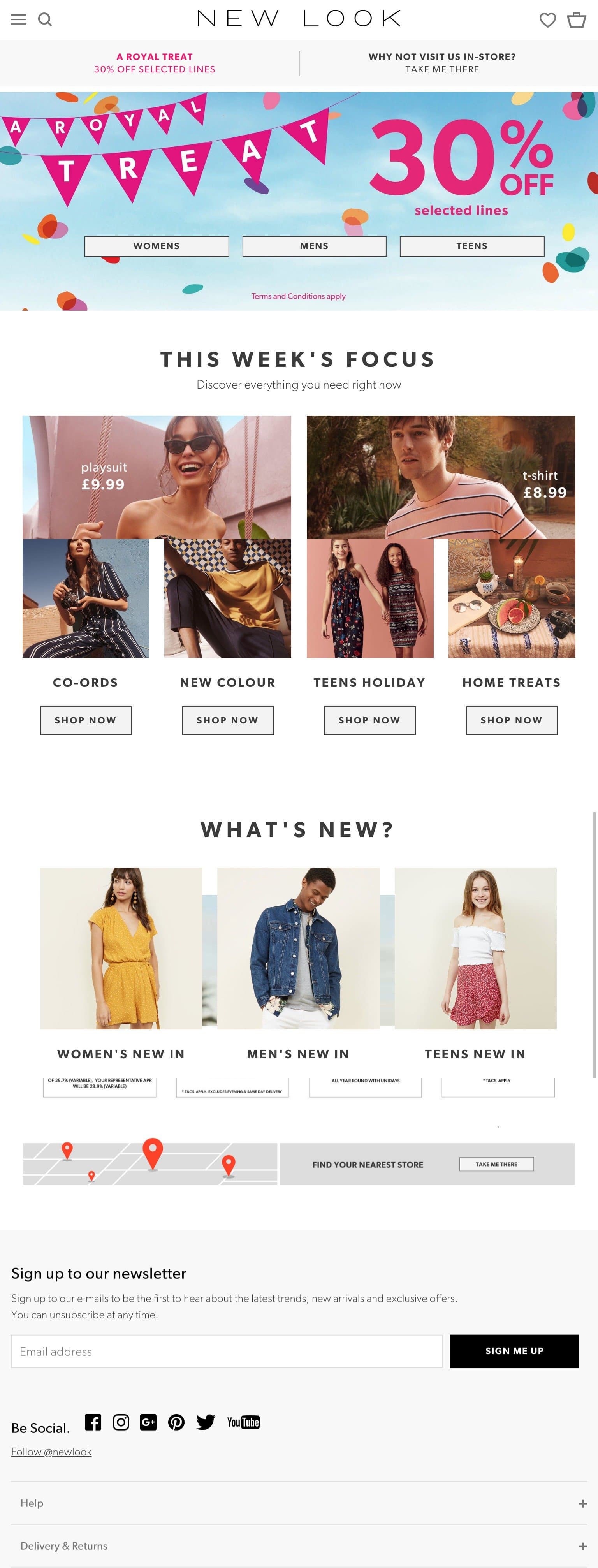
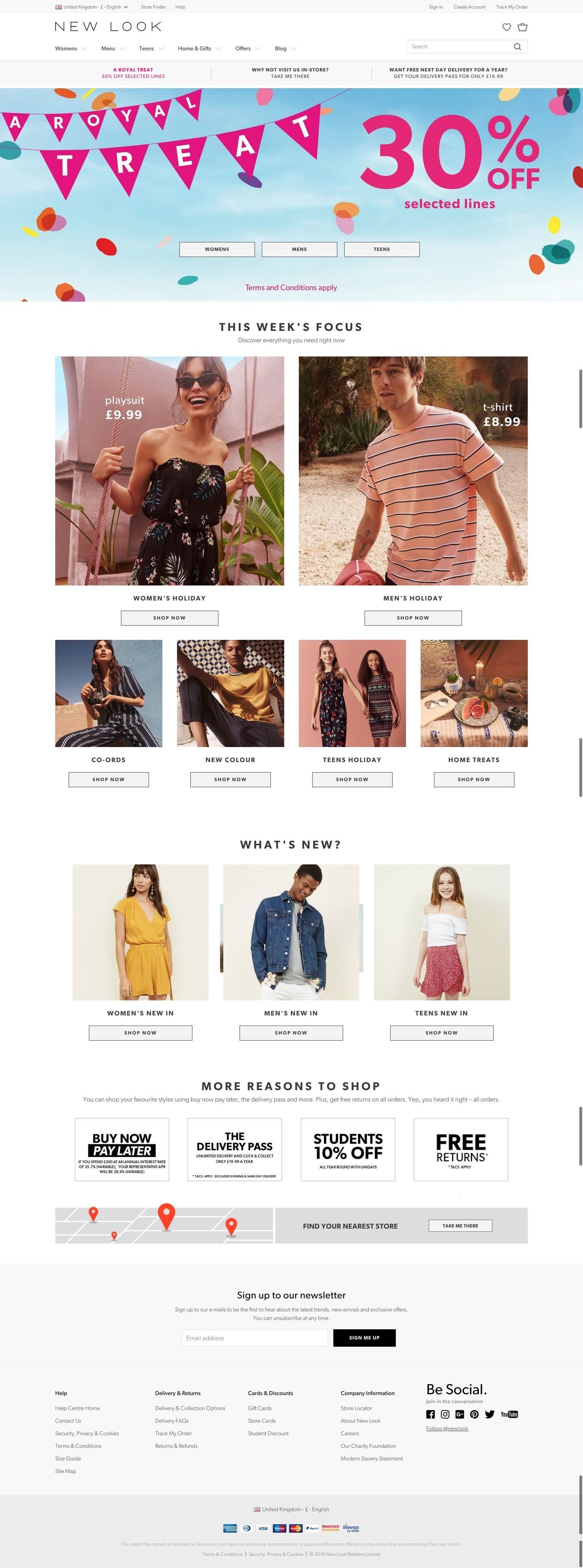
Phase 1 — foundations (2017–18, AngularJS, SASS/BEM, Hybris, with Salmon · Neoworks). I joined from inception and spent roughly a year building the foundational UI: checkout, header, footer and the core components the wider platform would be built on.
Phase 2 — features and mentoring (2017–18, same AngularJS stack). On the live platform I shipped customer-facing features across the purchase journey — Gift Card, Store Card, Address Finder, Checkout Delivery and Collection, and Delivery Pass — while refactoring ageing legacy components for maintainability and mentoring the junior front-end engineers on the team.
Phase 3 — modern rebuild (2019–20, Next.js, React, SCSS, Hybris, with Wunderman Thompson Commerce). I contributed to rebuilding the site on a modern Next.js stack, helping establish a Storybook-driven component library that brought the consistency and reuse the original architecture never had.
Outcome
Across all three engagements the work shipped and held. The Phase 1 foundations underpinned the wider platform every later feature was built on; the Phase 2 features went live across the purchase journey and the refactoring left the codebase more maintainable; and the Phase 3 rebuild established a component library that brought lasting consistency and reuse to the modern platform. Over four years I went from laying the first foundations of the site, to mentoring the engineers working on it, to helping rebuild it on a modern stack.